
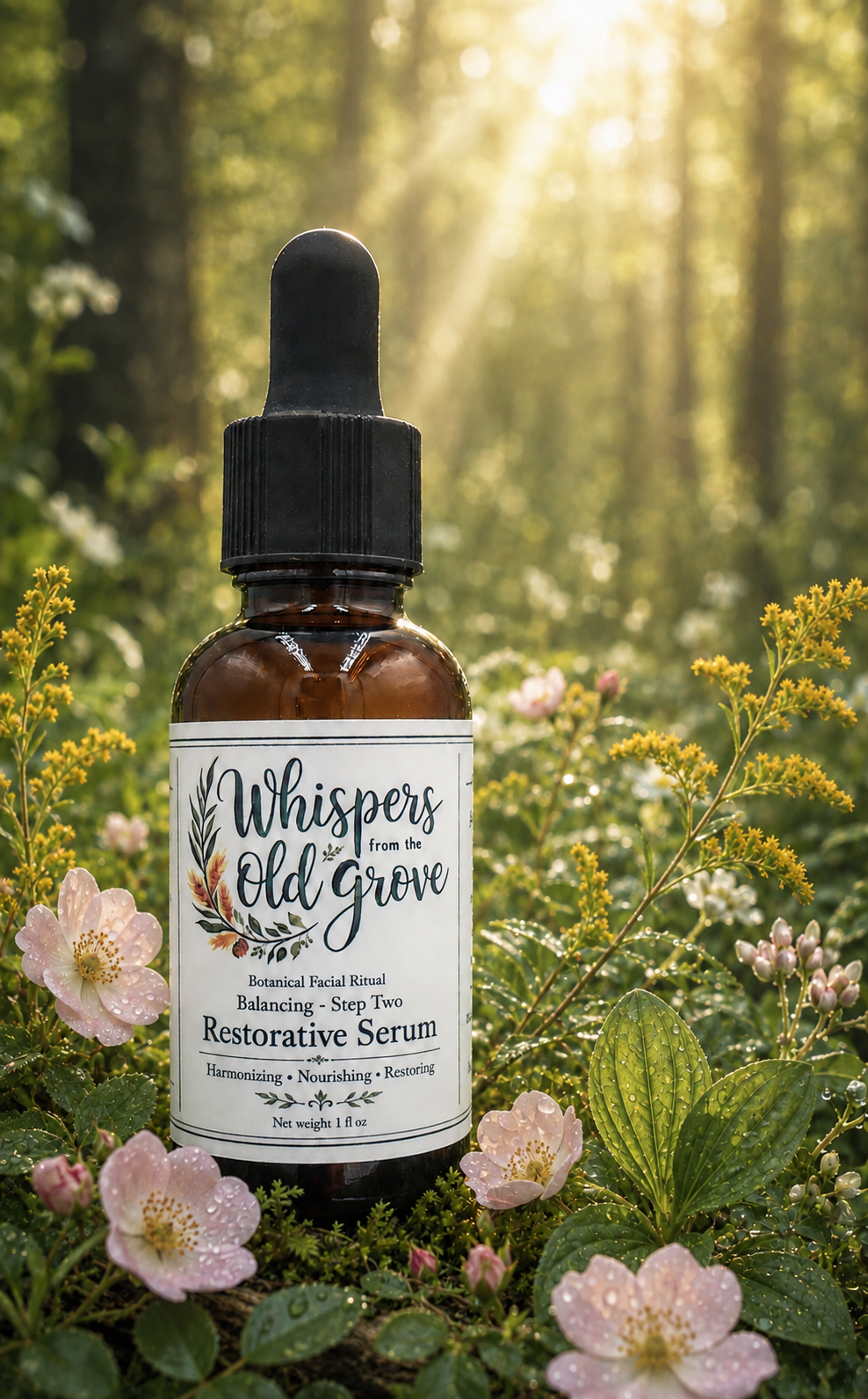
Facial Ritual - Restorative Blend
Facial Ritual - Restorative Blend
Couldn't load pickup availability
Deep nourishment, barrier restoration, and antioxidant-rich botanical care in one concentrated, fast-absorbing facial oil.
WHY THIS FORMULA EXCELS
- Lipid-replenishing nourishment: Rosehip, tamanu, and jojoba supply complementary fatty acids and wax esters that soften skin and reduce moisture loss.
- Multi-botanical restoration: Goldenrod and plantain infusions contribute oil-soluble botanical compounds traditionally used to calm and condition stressed skin.
- Antioxidant defense: Rosehip carotenoids, botanical terpenes, and vitamin E help protect skin-surface lipids from oxidative damage.
- Balanced delivery system: Jojoba’s stable, lightweight wax esters distribute concentrated botanical ingredients without a heavy finish.
- Targeted aromatic support: Properly diluted frankincense and carrot seed essential oils contribute antioxidant, soothing, and skin-conditioning activity.
INGREDIENTS – KEY COMPONENTS – BENEFITS – SCIENTIFIC RATIONALE – REFERENCES
1. Rosehip Oil
INCI: Rosa Rubiginosa Seed Oil
Key Components:
- Linoleic acid
- Alpha-linolenic acid
- Oleic acid
- Carotenoids, including beta-carotene and lycopene
- Tocopherols
- Phenolic compounds
- Naturally occurring trans-retinoic acid may be present in some oils, but amounts are variable and often very low
Functional Role:
- Regenerative emollient
- Essential-fatty-acid source
- Antioxidant botanical oil
Skin Benefits:
- Softens and conditions dry or weathered skin
- Supports the skin’s lipid barrier
- Helps improve the appearance of uneven texture and tone
- May improve the appearance of scars and post-inflammatory discoloration
- Helps protect skin-surface lipids from oxidative stress
Scientific Rationale:
Rosehip oil is rich in polyunsaturated fatty acids that support epidermal lipid organization and barrier function. Its carotenoids, tocopherols, and phenolic compounds provide antioxidant activity. Limited clinical evidence suggests that topical rosehip preparations may improve the appearance of postsurgical scars, although larger, rigorously controlled studies are still needed.
2. Tamanu Oil
INCI: Calophyllum Inophyllum Seed Oil
Key Components:
- Oleic acid
- Linoleic acid
- Stearic and palmitic acids
- Calophyllolide
- Neoflavonoids and pyranocoumarins
- Xanthones
- Tocopherols and other antioxidant compounds
Functional Role:
- Rich restorative emollient
- Skin-conditioning botanical
- Antioxidant and soothing oil
Skin Benefits:
- Softens and replenishes dry skin
- Helps reduce the appearance of redness and irritation
- Supports the skin’s natural recovery processes
- Helps improve the appearance of compromised or uneven skin
- Provides antioxidant protection to skin-surface lipids
Scientific Rationale:
Tamanu oil contains fatty acids that reinforce emolliency together with bioactive compounds such as calophyllolide. Laboratory and animal studies demonstrate anti-inflammatory, antioxidant, antimicrobial, and wound-repair activity.
3. Goldenrod-Infused Jojoba Oil
Typical INCI: Simmondsia Chinensis Seed Oil (and) Solidago [canadensis and altissima Species] Flower Extract
Key Components:
From jojoba:
- Long-chain wax esters
- Fatty alcohols and fatty acids
- Tocopherols
- Phytosterols
Potentially extracted from goldenrod:
- Flavonoids, including quercetin and kaempferol derivatives
- Phenolic acids
- Triterpenoid saponins
- Diterpenes and other lipophilic phytochemicals
Functional Role:
- Lightweight emollient and botanical carrier
- Skin-conditioning infusion
- Antioxidant and soothing support
Skin Benefits:
- Softens skin without an excessively greasy feel
- Helps reduce moisture loss
- Supports a smooth, resilient skin barrier
- Helps calm the appearance of environmentally stressed skin
- Provides supplementary antioxidant botanical activity
Scientific Rationale:
Jojoba is technically a liquid wax composed predominantly of stable wax esters. These esters form a breathable emollient layer that improves softness and helps limit transepidermal water loss. Goldenrod contains antioxidant and inflammation-modulating phytochemicals.
4. Plantain-Infused Jojoba Oil
Typical INCI: Simmondsia Chinensis Seed Oil (and) Plantago Major Leaf Extract
Key Components:
From jojoba:
- Long-chain wax esters
- Fatty alcohols
- Tocopherols
- Phytosterols
Associated with plantain leaf:
- Aucubin and other iridoid glycosides
- Allantoin
- Flavonoids
- Phenolic acids
- Tannins
- Mucilage polysaccharides
Functional Role:
- Gentle botanical emollient
- Skin-soothing infusion
- Barrier-conditioning carrier
Skin Benefits:
- Softens dry, rough, or weather-exposed skin
- Helps calm the appearance of minor redness
- Supports comfortable, healthy-looking skin
- Helps maintain surface moisture
- Complements richer restorative oils without adding excessive heaviness
Scientific Rationale:
Plantain extracts have shown antioxidant, inflammation-modulating, fibroblast-supporting, and wound-repair activity in laboratory, animal, and limited clinical research.
5. Frankincense Essential Oil
INCI: Boswellia Serrata Oil
Key Components:
- Alpha-pinene
- Limonene
- Alpha-thujene
- Sabinene
- Beta-caryophyllene
- Incensole-related diterpenes in some species and preparations
Functional Role:
- Aromatic botanical active
- Skin-conditioning essential oil
- Antioxidant and soothing support
Skin Benefits:
- Helps calm the appearance of stressed skin
- Supports a smooth, balanced-looking complexion
- Provides supplementary antioxidant activity
- Contributes a warm, resinous aromatic profile
Scientific Rationale:
Frankincense essential oil contains volatile terpenes that demonstrate inflammation-modulating and antioxidant activity in laboratory models. Research using human skin cells suggests that frankincense essential oil can influence pathways associated with inflammation and tissue remodeling.
6. Carrot Seed Essential Oil
INCI: Daucus Carota Sativa Seed Oil
Key Components:
- Carotol
- Daucol
- Beta-bisabolene
- Alpha-pinene
- Sabinene
- Other monoterpenes and sesquiterpenes
Functional Role:
- Concentrated aromatic botanical
- Skin-conditioning essential oil
- Supplementary antioxidant and soothing ingredient
Skin Benefits:
- Helps condition dull or environmentally stressed skin
- Supports a balanced, revitalized appearance
- Provides limited antioxidant and inflammation-modulating activity
- Contributes an earthy, herbaceous aroma
Scientific Rationale:
Carrot seed essential oil is commonly rich in carotol, although its composition varies with cultivar, geography, harvest stage, and distillation conditions. Laboratory studies suggest anti-inflammatory, antimicrobial, and antifungal potential.
7. Vitamin E
INCI: Tocopheryl Acetate
Key Components:
- Alpha-, beta-, gamma-, and delta-tocopherols in mixed tocopherols
- Alpha-tocopherol in purified natural vitamin E
- Tocopheryl acetate in stabilized vitamin E derivatives
Functional Role:
- Lipid-phase antioxidant
- Skin-conditioning agent
- Formula-stability support
Skin Benefits:
- Helps protect skin-surface lipids from oxidation
- Supports soft, conditioned skin
- Complements the antioxidant activity of botanical oils
- Helps maintain the quality and stability of oxidation-prone oils
Scientific Rationale:
Tocopherols interrupt lipid-peroxidation chain reactions by donating hydrogen to lipid radicals. This helps protect both the formula’s unsaturated oils and skin-surface lipids from oxidative degradation.
FORMULA SYNERGY
The formula combines four complementary systems:
- Barrier-supporting lipids: Rosehip and tamanu oils replenish the skin with oleic, linoleic, and alpha-linolenic acids.
- Lightweight moisture retention: Jojoba wax esters soften skin and help reduce moisture loss while carrying the goldenrod and plantain infusions.
- Botanical antioxidant support: Rosehip carotenoids, tamanu constituents, infused botanicals, essential-oil terpenes, and vitamin E help defend the oil phase and skin surface against oxidation.
- Concentrated aromatic activity: Frankincense and carrot seed essential oils provide complementary terpenes when used at appropriately diluted, skin-safe levels.
This is an anhydrous facial oil, not a hydration serum in the technical sense. It does not add water to the skin as glycerin or hyaluronic acid would. Its principal moisturizing action is to soften the skin, supplement surface lipids, and slow moisture loss. For best performance, it can be applied over slightly damp skin or after a water-based hydration serum.
REFERENCES
- Oargă, D. P., et al. (2024). Unveiling the mechanisms for the development of rosehip-based dermatological products: An updated review. PMC.
- Belkhelladi, M., et al. (2024). Rosehip extract and wound healing: A review. PubMed.
- Pribowo, A., et al. (2021). Potential of Tamanu (Calophyllum inophyllum) oil for atopic dermatitis treatment. PMC.
- Léguillier, T., et al. (2015). The wound-healing and antibacterial activity of five ethnomedical Calophyllum inophyllum oils. PMC.
- Raharivelomanana, P., et al. (2018). Tamanu oil and skin active properties: From traditional to modern cosmetic uses. OCL—Oilseeds and Fats, Crops and Lipids.
- Fursenco, C., et al. (2020). Solidago virgaurea L.: A review of its ethnomedicinal uses, phytochemistry, and pharmacological activities. PMC.
- Samuelsen, A. B. (2000). The traditional uses, chemical constituents and biological activities of Plantago major L.: A review. PMC.
- Zhakipbekov, K., et al. (2023). Antimicrobial and other biomedical properties of extracts from Plantago major, Plantaginaceae. PMC.
- Keshavarzi, A., et al. (2022). Therapeutic efficacy of great plantain (Plantago major L.) in second-degree burn wound healing. PMC.
- Gad, H. A., et al. (2021). Jojoba oil: An updated comprehensive review on chemistry, pharmaceutical uses, and toxicity. PMC.
- Tietel, Z., et al. (2024). Topical application of jojoba wax: Effects on cutaneous repair and associated biological activity. PMC.
- Han, X., et al. (2017). Biological activity of frankincense essential oil in human dermal fibroblasts. PMC.
- Almeida-da-Silva, C. L. C., et al. (2022). Effects of frankincense compounds on infection, inflammation, and oral health. PMC.
- Alves-Silva, J. M., et al. (2016). New claims for wild carrot (Daucus carota subsp. carota) essential oil. PMC.
- Keen, M. A., & Hassan, I. (2016). Vitamin E in dermatology. PMC.
- Thiele, J. J., & Ekanayake-Mudiyanselage, S. (2007). Vitamin E in human skin: Organ-specific physiology and considerations for its use in dermatology. Molecular Aspects of Medicine, 28(5–6), 646–667.
- Thiele, J. J., et al. (2005). Vitamin E: Critical review of its current use in cosmetic and clinical dermatology. PubMed.
- Lin, T. K., Zhong, L., & Santiago, J. L. (2018). Anti-inflammatory and skin-barrier repair effects of topical application of some plant oils. PMC
This information describes traditional use and published research and is not intended to diagnose, treat, cure, or prevent disease.
Talk about your brand
Share information about your brand with your customers. Describe a product, make announcements, or welcome customers to your store.