
Herbal Tea - Breath of the Grove
Herbal Tea - Breath of the Grove
Couldn't load pickup availability
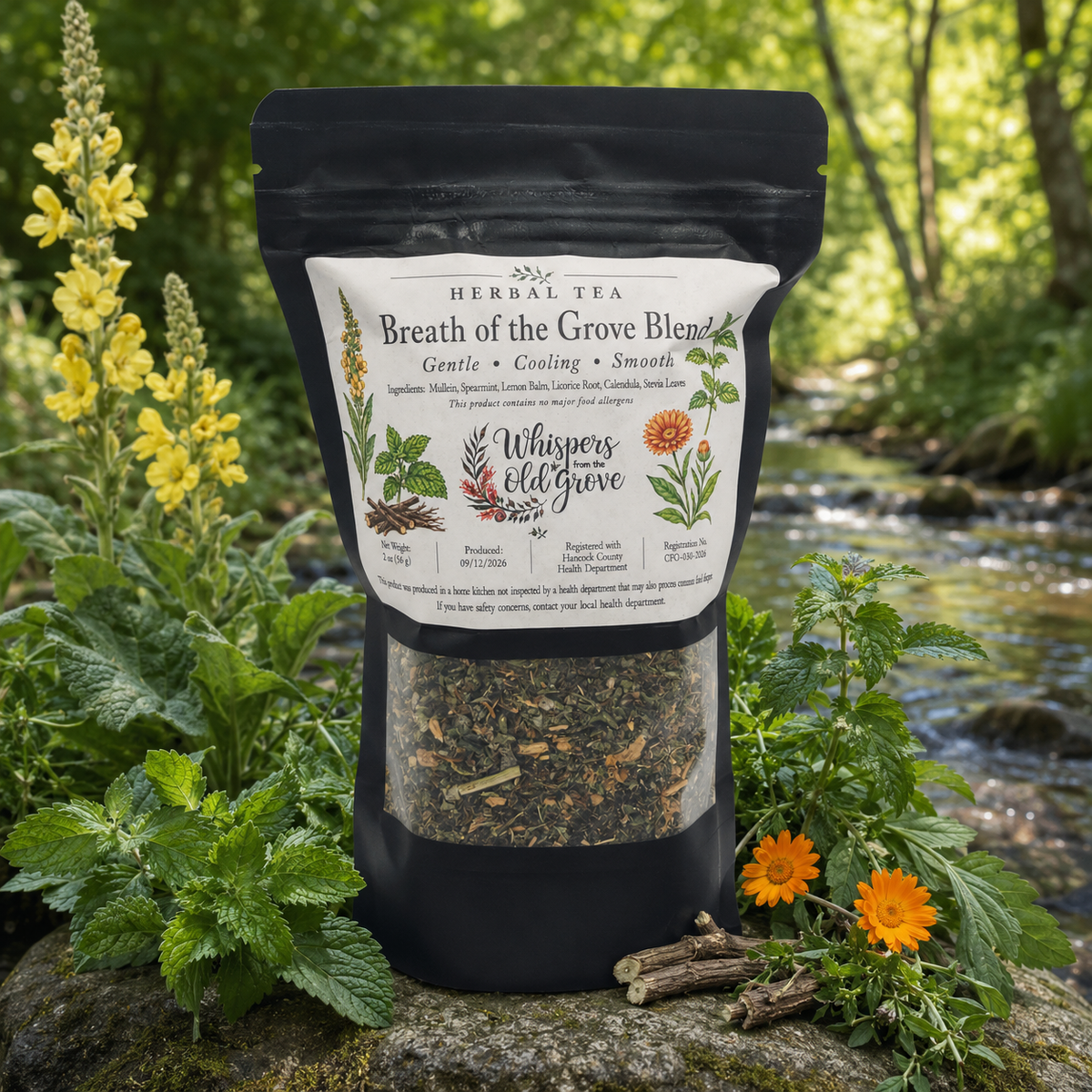
A peaceful cup to sip slowly—like taking a deep breath in the heart of the grove.
Inspired by the fresh air and quiet stillness beneath the trees, this gentle herbal blend brings together earthy mullein leaves, cooling mint, calming lemon balm, golden calendula, and the natural sweetness of licorice root and stevia. The result is a smooth, refreshing cup with soft herbal notes and a pleasantly sweet finish. Traditionally used for respiratory and throat-soothing support.
KEY INGREDIENTS & BENEFITS
|
INCI / Botanical Name |
Common Name |
Key Active Compounds |
Evidence-Based Health Benefits |
|
Verbascum thapsus |
Mullein Leaf |
Mucilage polysaccharides, saponins, flavonoids, iridoid glycosides |
Traditionally used for respiratory and throat-soothing support. Laboratory studies demonstrate antioxidant, antimicrobial, and anti-inflammatory activity. Mucilage contributes soothing qualities for mucosal tissues. |
|
Mentha piperita / Mentha spicata |
Mint |
Menthol or carvone, limonene, rosmarinic acid, flavonoids |
Research supports digestive comfort, antioxidant activity, antimicrobial effects, and soothing gastrointestinal support. Adds cooling aromatic freshness. |
|
Melissa officinalis |
Lemon Balm |
Rosmarinic acid, caffeic acid, citronellal, flavonoids |
Human and laboratory studies support calming effects, relaxation, mild digestive support, antioxidant activity, and cognitive-support potential. |
|
Glycyrrhiza glabra |
Licorice Root |
Glycyrrhizin, glabridin, liquiritin, flavonoids, saponins |
Traditionally used for throat and digestive comfort. Research supports soothing mucosal effects, antioxidant activity, and healthy inflammatory balance. |
|
Calendula officinalis |
Calendula Flower |
Triterpenoids, flavonoids, carotenoids, quercetin, polysaccharides |
Demonstrates antioxidant, soothing, anti-inflammatory, and antimicrobial properties in laboratory and traditional-use studies. Traditionally used for mucosal and digestive wellness support. |
|
Stevia rebaudiana |
Stevia Leaves |
Steviol glycosides, chlorogenic acid, flavonoids, diterpenes |
Natural low-calorie sweetener with antioxidant properties. Provides sweetness without refined sugar while contributing plant polyphenols. |
Combined / Synergistic Benefits of the Full Blend
1. Traditional Throat & Respiratory Comfort
Mullein leaf and licorice root have long histories of traditional use for soothing the throat and respiratory tract. Calendula and mint contribute additional soothing and cooling botanical qualities.
2. Calm + Comforting Herbal Balance
Lemon balm contributes calming and relaxing qualities while mint provides refreshing aromatic brightness, creating a drink that feels both soothing and uplifting.
3. Gentle Digestive Support
Mint and lemon balm support digestive comfort, while licorice root contributes soothing mucosal support traditionally associated with digestive wellness.
4. Antioxidant Botanical Synergy
All six herbs contribute flavonoids, polyphenols, carotenoids, and antioxidant compounds that support overall wellness and protection from oxidative stress.
5. Smooth, Naturally Sweet Flavor Profile
Licorice root and stevia naturally soften herbal bitterness while calendula contributes gentle floral notes and mint adds fresh brightness.
Peer-Reviewed References
Mullein (Verbascum thapsus)
- Turker AU, Camper ND. Biological activity of common mullein, a medicinal plant.
Journal of Ethnopharmacology. 2002.
PMID: 12020931 - Tatli II, Akdemir ZS. Traditional uses and biological activities of Verbascum species.
FABAD Journal of Pharmaceutical Sciences. 2004. - Aziz N, et al. Antioxidant and antimicrobial activity of Verbascum thapsus extracts.
Asian Pacific Journal of Tropical Biomedicine. 2011.
Mint (Mentha spp.)
- McKay DL, Blumberg JB. A review of the bioactivity and potential health benefits of peppermint tea.
Phytotherapy Research. 2006.
PMID: 16767798 - Grigoleit HG, Grigoleit P. Peppermint oil in irritable bowel syndrome.
Phytomedicine. 2005.
PMID: 16121521 - Kedia G, et al. Antimicrobial and antioxidant properties of Mentha species.
Food Chemistry. 2014.
Lemon Balm (Melissa officinalis)
- Kennedy DO, et al. Modulation of mood and cognitive performance following acute administration of Melissa officinalis.
Psychosomatic Medicine. 2002.
PMID: 12021415 - Shakeri A, et al. Melissa officinalis: A review of phytochemistry and pharmacology.
Journal of Ethnopharmacology. 2016.
PMID: 26739959 - Cases J, et al. Pilot trial of Melissa officinalis in stress and sleep disturbances.
Mediterranean Journal of Nutrition and Metabolism. 2011.
Licorice Root (Glycyrrhiza glabra)
- Pastorino G, et al. Liquorice (Glycyrrhiza glabra): A phytochemical and pharmacological review.
Phytotherapy Research. 2018.
PMID: 30051984 - Asl MN, Hosseinzadeh H. Review of pharmacological effects of Glycyrrhiza sp. and its bioactive compounds.
Phytotherapy Research. 2008.
PMID: 18446848 - Fiore C, et al. A history of the therapeutic use of liquorice in European traditional medicine.
Journal of Ethnopharmacology. 2005.
Calendula (Calendula officinalis)
- Preethi KC, et al. Antioxidant potential of flowers of Calendula officinalis Linn.
Indian Journal of Biochemistry & Biophysics. 2006.
PMID: 17436557 - Della Loggia R, et al. The role of triterpenoids in the topical anti-inflammatory activity of Calendula officinalis flowers.
Planta Medica. 1994. - Efstratiou E, et al. Antimicrobial activity of Calendula officinalis extract.
Complementary Therapies in Clinical Practice. 2012.
Stevia (Stevia rebaudiana)
-
Lemus-Mondaca R, et al. Stevia rebaudiana Bertoni, source of a high-potency natural sweetener: A comprehensive review.
Food Chemistry. 2012. - Gupta E, et al. Steviol glycosides and their therapeutic potential.
Nutrients. 2013.
PMID: 23904017 - Chatsudthipong V, Muanprasat C. Stevioside and related compounds: therapeutic benefits beyond sweetness.
Pharmacology & Therapeutics. 2009.
PMID: 19427952
This information describes traditional use and published research and is not intended to diagnose, treat, cure, or prevent disease.
Talk about your brand
Share information about your brand with your customers. Describe a product, make announcements, or welcome customers to your store.