
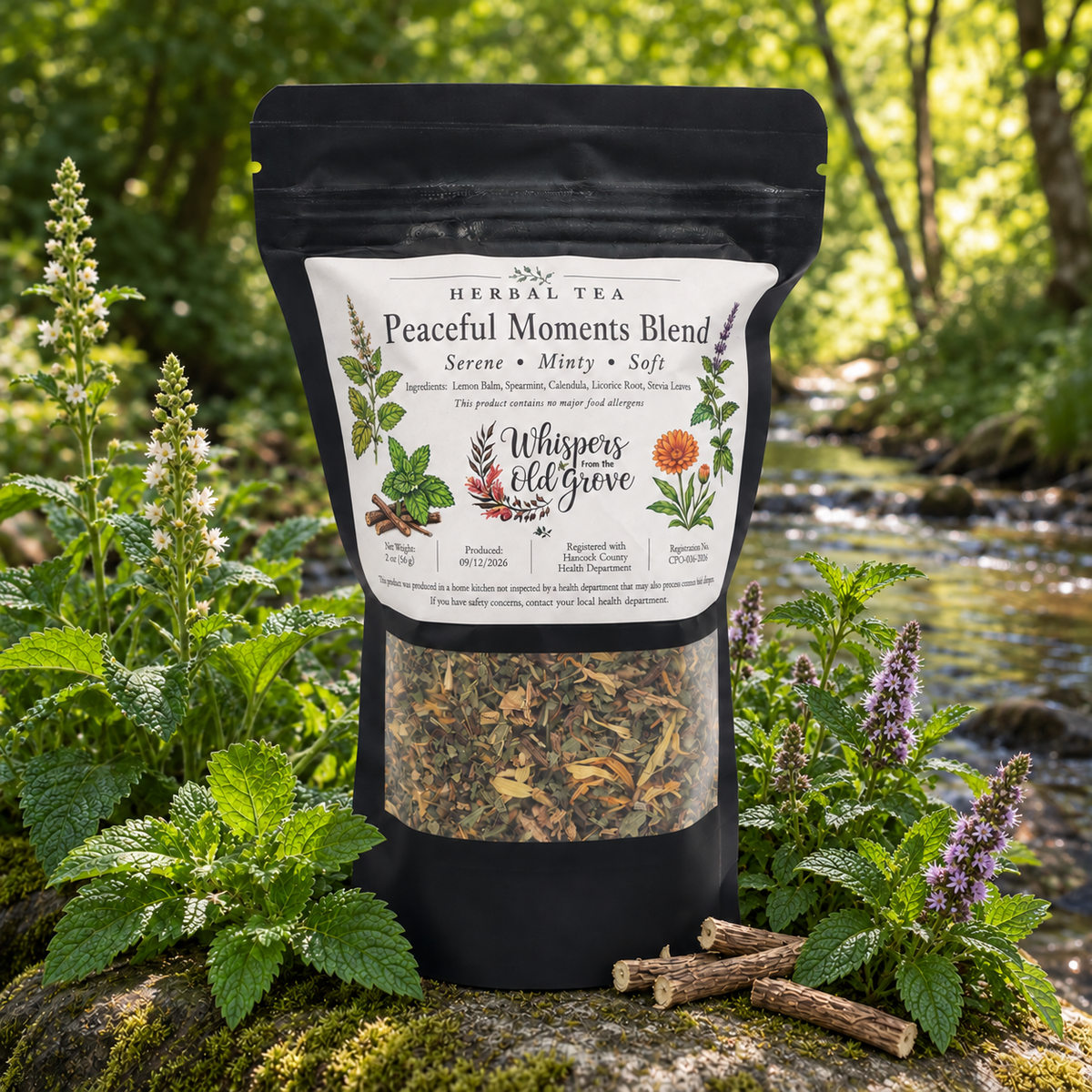
Herbal Tea - Peaceful Moments
Herbal Tea - Peaceful Moments
Couldn't load pickup availability
A peaceful cup for slowing down, settling in, and finding a quiet moment at the end of the day.
Inspired by the peace of a quiet country evening, this calming herbal blend brings together gentle lemon balm, refreshing spearmint, golden calendula, and the naturally sweet warmth of licorice root. The result is a smooth, comforting cup with soft herbal notes and a pleasantly sweet finish.
KEY INGREDIENTS & BENEFITS
|
INCI / Botanical Name |
Common Name |
Key Active Compounds |
Evidence-Based Health Benefits |
|
Melissa officinalis |
Lemon Balm |
Rosmarinic acid, caffeic acid, flavonoids, citronellal, eugenol |
Human and laboratory studies support calming effects, relaxation, antioxidant activity, mild cognitive support, digestive comfort, and sleep-quality support. |
|
Mentha spicata |
Spearmint) |
Menthol or carvone, rosmarinic acid, limonene, flavonoids |
Research supports digestive comfort, antioxidant activity, antimicrobial properties, and soothing gastrointestinal effects.. |
|
Calendula officinalis |
Calendula Flower |
Triterpenoids, flavonoids, carotenoids, quercetin, polysaccharides |
Demonstrates antioxidant, soothing, anti-inflammatory, and antimicrobial properties in laboratory and traditional-use studies. Traditionally used for skin, mucosal, and digestive soothing support. |
|
Glycyrrhiza glabra |
Licorice Root |
Glycyrrhizin, liquiritin, glabridin, flavonoids, saponins |
Research supports soothing effects on the throat and digestive tract, antioxidant activity, and anti-inflammatory properties. Traditionally used for respiratory and digestive support. |
Combined Benefits of the Full Blend
1. Calm + Comforting Herbal Support
Lemon balm contributes calming and relaxing properties, while mint adds cooling freshness and sensory uplift. Together they create a soothing yet refreshing experience.
2. Gentle Digestive Support
Mint and licorice root both have strong traditional digestive-supportive histories. Their aromatic and soothing compounds may help support digestive comfort after meals.
3. Throat & Respiratory Soothing Qualities
Licorice root and calendula have traditionally been used to soothe the throat and mucosal tissues. Combined with mint’s cooling sensation, the blend creates a smooth, comforting herbal profile.
4. Antioxidant Botanical Synergy
All four herbs contain flavonoids and phenolic compounds that contribute antioxidant activity and support overall wellness.
5. Smooth Flavor Balance
Licorice root naturally softens bitterness and enhances sweetness, calendula adds gentle floral notes, mint brightens the blend, and lemon balm contributes soft citrus-herbal depth.
Peer-Reviewed References
Lemon Balm (Melissa officinalis)
- Kennedy DO, et al. Modulation of mood and cognitive performance following acute administration of Melissa officinalis.
Psychosomatic Medicine. 2002.
PMID: 12021415 - Shakeri A, et al. Melissa officinalis: A review of phytochemistry and pharmacology.
Journal of Ethnopharmacology. 2016.
PMID: 26739959 - Cases J, et al. Pilot trial of Melissa officinalis in stress and sleep disturbances.
Mediterranean Journal of Nutrition and Metabolism. 2011.
Mint (Mentha spicata)
- McKay DL, Blumberg JB. A review of the bioactivity and potential health benefits of peppermint tea.
Phytotherapy Research. 2006.
PMID: 16767798 - Grigoleit HG, Grigoleit P. Peppermint oil in irritable bowel syndrome.
Phytomedicine. 2005.
PMID: 16121521 - Kedia G, et al. Antimicrobial and antioxidant properties of Mentha species.
Food Chemistry. 2014.
Calendula (Calendula officinalis)
- Preethi KC, et al. Antioxidant potential of flowers of Calendula officinalis Linn.
Indian Journal of Biochemistry & Biophysics. 2006.
PMID: 17436557 - Della Loggia R, et al. The role of triterpenoids in the topical anti-inflammatory activity of Calendula officinalis flowers.
Planta Medica. 1994. - Efstratiou E, et al. Antimicrobial activity of Calendula officinalis extract.
Complementary Therapies in Clinical Practice. 2012.
Licorice Root (Glycyrrhiza glabra)
- Pastorino G, et al. Liquorice (Glycyrrhiza glabra): A phytochemical and pharmacological review.
Phytotherapy Research. 2018.
PMID: 30051984 - Asl MN, Hosseinzadeh H. Review of pharmacological effects of Glycyrrhiza sp. and its bioactive compounds.
Phytotherapy Research. 2008.
PMID: 18446848 -
Fiore C, et al. A history of the therapeutic use of liquorice in European traditional medicine.
Journal of Ethnopharmacology. 2005.
This information describes traditional use and published research and is not intended to diagnose, treat, cure, or prevent disease
Talk about your brand
Share information about your brand with your customers. Describe a product, make announcements, or welcome customers to your store.