
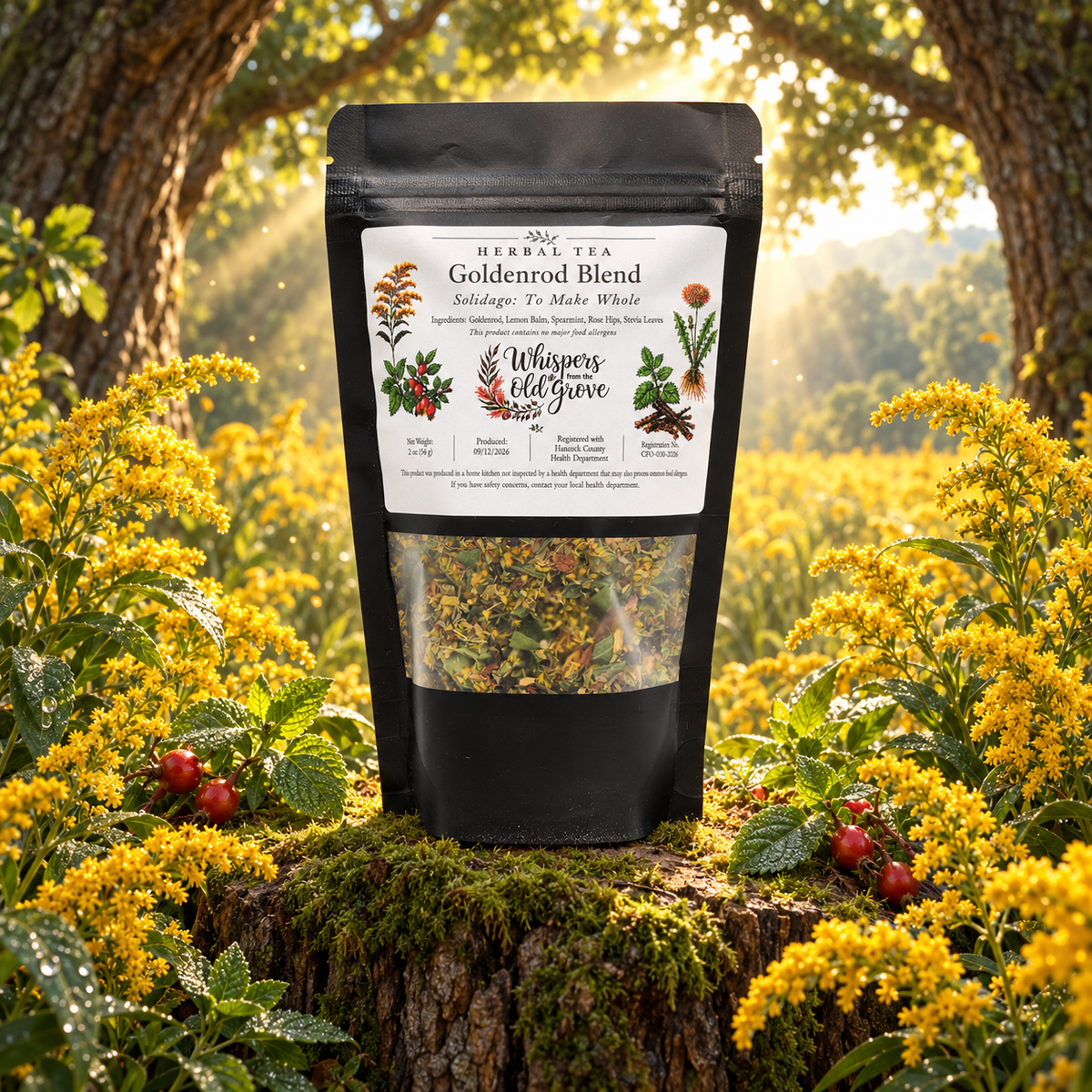
Herbal Tea - Goldenrod
Herbal Tea - Goldenrod
Couldn't load pickup availability
A bright, renewing cup rooted in tradition and inspired by the quiet wisdom of the grove
“Goldenrod” takes its common name from its brilliant golden-yellow flowers. Its scientific genus, Solidago, comes from Latin roots meaning “to make whole,” reflecting the plant’s long history of traditional medicinal use.
KEY INGREDIENTS & BENEFITS
|
INCI / Botanical Name |
Common Name |
Key Active Compounds |
Evidence-Based Health Benefits |
|
Solidago virgaurea / Solidago canadensis |
Goldenrod |
Flavonoids (quercetin, rutin), saponins, phenolic acids, leiocarposide, tannins |
Demonstrates antioxidant, anti-inflammatory, mild diuretic, and antimicrobial activity in laboratory and traditional-use studies. Traditionally used for urinary tract and seasonal wellness support. |
|
Melissa officinalis |
Lemon Balm |
Rosmarinic acid, caffeic acid, flavonoids, citronellal, eugenol |
Human and laboratory studies support calming effects, relaxation, sleep quality support, antioxidant activity, and mild digestive comfort benefits. |
|
Mentha spicata |
Spearmint |
Carvone, limonene, rosmarinic acid, flavonoids, menthol (lower levels than peppermint) |
Research supports antioxidant, antimicrobial, digestive-supportive, and cognitive-support potential. Spearmint is often gentler and sweeter tasting than peppermint. |
|
Rosa canina |
Rose Hips |
Vitamin C, carotenoids, flavonoids, galactolipids, polyphenols |
Rich in antioxidants and vitamin C. Studies support anti-inflammatory activity, oxidative stress reduction, and nutritional immune-supportive properties. |
|
Stevia rebaudiana |
Stevia Leaf |
Steviol glycosides, chlorogenic acid, flavonoids, diterpenes |
Primarily used as a natural sweetener. Research supports antioxidant activity and potential metabolic-support properties while providing sweetness without added sugar. |
Combined / Synergistic Benefits of the Full Blend
1. Antioxidant-Rich Botanical Support
Goldenrod, rose hips, lemon balm, and spearmint all contribute polyphenols, flavonoids, and phenolic acids that help support the body’s natural antioxidant defenses and overall wellness.
2. Calm + Refreshing Balance
Lemon balm offers calming and soothing qualities, while spearmint provides a bright, cooling freshness. Together they create a balanced herbal profile that feels both comforting and uplifting.
3. Gentle Digestive Comfort
Spearmint and lemon balm have long histories of traditional digestive use. Their combined aromatic compounds may help support post-meal comfort and digestive ease.
4. Seasonal & Nutritional Wellness Support
Rose hips provide natural vitamin C and antioxidant carotenoids, while goldenrod contributes traditional seasonal-supportive herbal properties.
5. Naturally Sweet Herbal Blend
Stevia softens the herbal profile naturally without refined sugar, helping create a smooth, approachable blend while maintaining a wellness-focused formulation.
Peer-Reviewed References
Goldenrod (Solidago spp.)
- Apáti P, et al. Phytochemical investigation and pharmacological review of Solidago species.
Journal of Ethnopharmacology. 2003.
PMID: 12963149 - Gross SC, et al. Antiinflammatory and antioxidant constituents of Solidago virgaurea.
Planta Medica. 2002.
PMID: 12494339 - Radulović NS, et al. Chemical composition and antimicrobial activity of Solidago extracts.
Journal of Medicinal Food. 2007.
Lemon Balm (Melissa officinalis)
- Kennedy DO, et al. Modulation of mood and cognitive performance following acute administration of Melissa officinalis.
Psychosomatic Medicine. 2002.
PMID: 12021415 - Shakeri A, et al. Melissa officinalis: A review of phytochemistry and pharmacology.
Journal of Ethnopharmacology. 2016.
PMID: 26739959 - Cases J, et al. Pilot trial of Melissa officinalis in stress and sleep disturbances.
Mediterranean Journal of Nutrition and Metabolism. 2011.
Spearmint (Mentha spicata)
- McKay DL, Blumberg JB. A review of the bioactivity and potential health benefits of mint teas.
Phytotherapy Research. 2006.
PMID: 16767798 - Kedia G, et al. Antimicrobial and antioxidant properties of Mentha spicata.
Food Chemistry. 2014. - Ozakpinar OB, et al. Rosmarinic acid and antioxidant activity in spearmint.
Industrial Crops and Products. 2017.
Rose Hips (Rosa canina)
- Chrubasik C, et al. A systematic review on the Rosa canina effect and efficacy profiles.
Phytotherapy Research. 2008.
PMID: 18240191 - Roman I, Stănilă A, Stănilă S. Bioactive compounds and antioxidant activity of Rosa canina.
Molecules. 2013.
PMID: 24352072 - Winther K, et al. Rose hip powder reduces symptoms associated with inflammation.
Scandinavian Journal of Rheumatology. 2005.
Stevia (Stevia rebaudiana)
-
Lemus-Mondaca R, et al. Stevia rebaudiana Bertoni, source of a high-potency natural sweetener: A comprehensive review.
Food Chemistry. 2012. - Gupta E, et al. Steviol glycosides and their therapeutic potential.
Nutrients. 2013.
PMID: 23904017 - Chatsudthipong V, Muanprasat C. Stevioside and related compounds: therapeutic benefits beyond sweetness.
Pharmacology & Therapeutics. 2009.
PMID: 19427952
This information describes traditional use and published research and is not intended to diagnose, treat, cure, or prevent disease.
Talk about your brand
Share information about your brand with your customers. Describe a product, make announcements, or welcome customers to your store.