
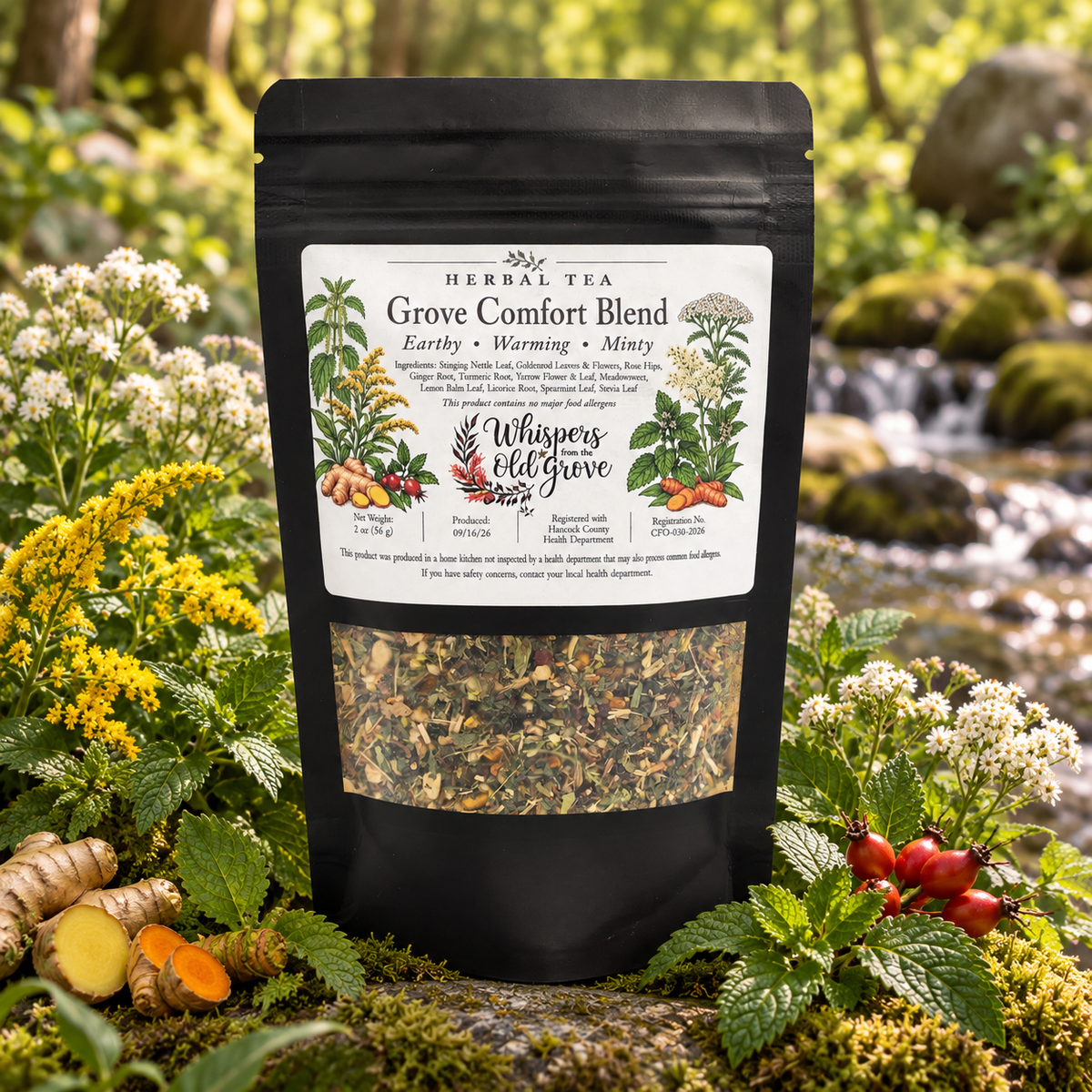
Herbal Tea - Grove Comfort Blend
Herbal Tea - Grove Comfort Blend
Couldn't load pickup availability
A warm, grounding cup inspired by the restorative stillness of the grove
Grove Comfort Blend brings together traditionally valued herbs, roots, flowers, and fruits in an earthy, gently warming infusion finished with refreshing spearmint. Ginger and turmeric provide warmth, while lemon balm and spearmint soften the blend with a calm, aromatic character.
The blend was formulated to offer a comforting botanical ritual for moments when the body feels weathered and rest is welcome.
Key Ingredients & Traditionally Recognized Properties
| Botanical name | Common name | Notable plant compounds | Traditional use and research summary |
|---|---|---|---|
| Urtica dioica | Stinging Nettle Leaf | Flavonoids, phenolic acids, chlorogenic acid, carotenoids, sterols and minerals | Traditionally used as a nourishing spring tonic and for musculoskeletal and urinary wellness. Laboratory research demonstrates antioxidant and inflammation-modulating activity, but human evidence for nettle tea remains limited. |
| Solidago spp. | Goldenrod Leaves & Flowers | Quercetin, rutin, phenolic acids, saponins, tannins and leiocarposide | Traditionally used for urinary, seasonal and general wellness support. Laboratory and traditional-use research describes antioxidant, antimicrobial and inflammation-modulating properties. |
| Rosa canina | Rose Hips | Vitamin C, carotenoids, flavonoids, polyphenols and galactolipids | Provides antioxidant plant compounds and has traditionally been used for nutritional and seasonal wellness. Clinical research involving standardized rose-hip preparations suggests potential joint-comfort benefits. |
| Zingiber officinale | Ginger Root | Gingerols, shogaols, paradols and zingerone | Traditionally used for digestive comfort, warmth and occasional nausea. Clinical research has examined standardized ginger preparations for nausea and musculoskeletal discomfort, with promising but variable results. |
| Curcuma longa | Turmeric Root | Curcuminoids, including curcumin, and aromatic turmerones | Traditionally used for digestive, joint and general wellness. Curcumin preparations have been studied for inflammation-related conditions, but turmeric tea contains substantially less curcumin than most researched extracts and curcumin is not readily absorbed. |
| Achillea millefolium | Yarrow Flower & Leaf | Flavonoids, sesquiterpene lactones, phenolic acids and volatile oils | Traditionally used for digestive comfort, seasonal wellness and general soothing support. Antioxidant, antispasmodic and inflammation-modulating effects have been reported primarily in laboratory and preclinical research. |
| Filipendula ulmaria | Meadowsweet | Salicylate derivatives, including salicin and salicylaldehyde, flavonoids, tannins and phenolic acids | Traditionally used for digestive comfort and occasional physical discomfort. Laboratory research describes antioxidant and inflammation-modulating activity; strong human clinical evidence is limited. |
| Melissa officinalis | Lemon Balm Leaf | Rosmarinic acid, caffeic acid, flavonoids, citronellal and other volatile compounds | Traditionally used to encourage calm and support digestive comfort. Small human studies using standardized preparations have reported effects on calmness, mood and responses to temporary stress. |
| Glycyrrhiza glabra | Licorice Root | Glycyrrhizin, liquiritin, isoliquiritigenin and flavonoids | Traditionally used to soothe the throat and digestive tract while adding natural sweetness. Glycyrrhizin can affect blood pressure, potassium levels and medication metabolism when consumed regularly or in substantial quantities. |
| Mentha spicata | Spearmint Leaf | Carvone, limonene, rosmarinic acid and flavonoids | Traditionally used for digestive comfort and aromatic refreshment. Research supports antioxidant and antimicrobial activity. |
| Stevia rebaudiana | Stevia Leaf | Steviol glycosides, chlorogenic acid and flavonoids | Provides natural sweetness without refined sugar. Steviol glycosides have been extensively evaluated as sweetening compounds. |
Combined Botanical Character of the Full Blend
1. Warming, Grounding Herbal Profile
Ginger and turmeric provide an earthy warmth, while goldenrod, nettle, yarrow and meadowsweet contribute a deeper field-and-grove character. Together, they create a substantial infusion suited to quiet, restorative moments.
2. Antioxidant-Rich Botanical Support
Nettle, goldenrod, rose hips, turmeric, lemon balm and spearmint contain flavonoids, phenolic acids, carotenoids and other compounds that demonstrate antioxidant activity in laboratory research. These constituents contribute to the blend’s broader wellness-focused character.
3. Traditional Comforting Herbs
Ginger, turmeric, yarrow and meadowsweet have long histories of traditional use for digestive and physical comfort. Current research into these plants varies considerably, and studies often use concentrated extracts rather than brewed tea.
4. Calm and Refreshing Balance
Lemon balm contributes a soft, calming quality, while spearmint provides a clean, refreshing finish. Their aromatic profiles help balance the blend’s earthier roots and leaves.
5. Gentle Digestive Tradition
Ginger, lemon balm, yarrow, spearmint and licorice have all been used traditionally to support digestion. Their combined flavors create a soothing after-meal or evening herbal infusion.
6. Naturally Rounded Flavor
Licorice root and stevia leaf soften the bitterness of nettle, goldenrod, turmeric and yarrow without the need for refined sugar. Rose hips provide a mild fruit note, while spearmint brightens the finish.
Selected Peer-Reviewed References
Stinging Nettle (Urtica dioica)
- Kregiel D, et al. Urtica spp.: Ordinary plants with extraordinary properties. Molecules. 2018;23(7):1664.
- Zeković Z, et al. Urtica dioica-derived phytochemicals for pharmacological and therapeutic applications. 2022. PubMed PMID: 35251206
Goldenrod (Solidago spp.)
- Apáti P, et al. Phytochemical investigation of Solidago species. Journal of Ethnopharmacology. 2003. PMID: 12963149.
- Gross SC, et al. Antiinflammatory and antioxidant constituents of Solidago virgaurea. Planta Medica. 2002. PMID: 12494339.
Rose Hips (Rosa canina)
- Chrubasik C, et al. A systematic review on the Rosa canina effect and efficacy profiles. Phytotherapy Research. 2008. PMID: 18240191.
- Roman I, Stănilă A, Stănilă S. Bioactive compounds and antioxidant activity of Rosa canina. Molecules. 2013. PMID: 24352072.
Ginger (Zingiber officinale)
- Terry R, et al. The use of ginger for the treatment of pain: a systematic review of clinical trials. Pain Medicine. 2011. PubMed PMID: 22054010
- Marx W, et al. The effect of ginger on platelet aggregation: a systematic literature review. PLoS One. 2015. PubMed PMID: 26488162
- Singh G, et al. Chemistry, antioxidant and antimicrobial investigations on essential oil and oleoresins of Zingiber officinale. Food and Chemical Toxicology. 2008. PubMed PMID: 18706468
Turmeric (Curcuma longa)
- Daily JW, Yang M, Park S. Efficacy of turmeric extracts and curcumin for alleviating the symptoms of joint arthritis: a systematic review and meta-analysis. Journal of Medicinal Food. 2016.
- Hewlings SJ, Kalman DS. Curcumin: A review of its effects on human health. Foods. 2017;6(10):92.
Lemon Balm (Melissa officinalis)
- Kennedy DO, Little W, Scholey AB. Attenuation of laboratory-induced stress in humans after acute administration of Melissa officinalis. Psychosomatic Medicine. 2004. PubMed PMID: 15272110
- Scholey A, et al. Anti-stress effects of lemon balm-containing foods. Nutrients. 2014. PubMed PMID: 25360512
- Ghazizadeh J, et al. The effects of lemon balm on depression and anxiety in clinical trials: a systematic review and meta-analysis. Phytotherapy Research. 2021. PubMed PMID: 34449930
Spearmint (Mentha spicata)
- McKay DL, Blumberg JB. A review of the bioactivity and potential health benefits of mint teas. Phytotherapy Research. 2006. PMID: 16767798.
Licorice (Glycyrrhiza glabra)
- Omar HR, et al. Licorice abuse: time to send a warning message. Therapeutic Advances in Endocrinology and Metabolism. 2012.
- Nazari S, et al. The effect of glycyrrhizin acid and licorice on blood pressure and body weight: a systematic review and meta-analysis. Journal of Human Hypertension. 2017.
Stevia (Stevia rebaudiana)
- Lemus-Mondaca R, et al. Stevia rebaudiana Bertoni, source of a high-potency natural sweetener: A comprehensive review. Food Chemistry. 2012.
- Chatsudthipong V, Muanprasat C. Stevioside and related compounds: therapeutic benefits beyond sweetness. Pharmacology & Therapeutics. 2009. PMID: 19427952.
Talk about your brand
Share information about your brand with your customers. Describe a product, make announcements, or welcome customers to your store.