
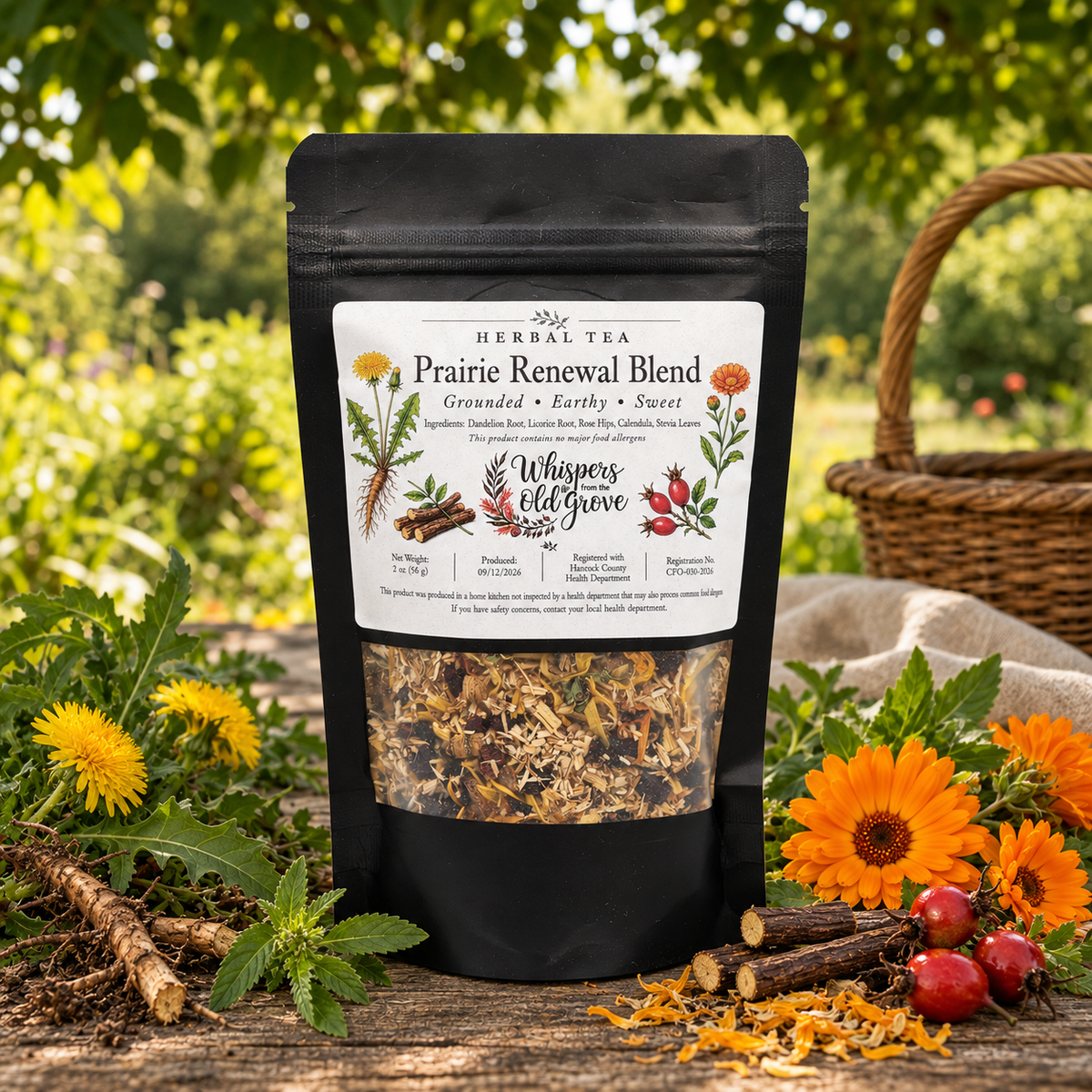
Herbal Tea - Prairie Renewal
Herbal Tea - Prairie Renewal
Couldn't load pickup availability
A restorative cup inspired by the prairie’s enduring rhythm of rest, renewal, and new growth.
Inspired by the resilient plants of the open prairie, this earthy herbal blend combines roasted dandelion root, warming licorice root, bright rose hips, golden calendula, and naturally sweet stevia leaves. Traditionally enjoyed to support digestion and the body’s natural cleansing processes, it offers a grounding cup with earthy depth, gentle fruitiness, and a softly sweet finish.
KEY INGREDIENTS & BENEFITS
|
INCI / Botanical Name |
Common Name |
Key Active Compounds |
Evidence-Based Health Benefits |
|
Taraxacum officinale Root |
Dandelion Root |
Sesquiterpene lactones, taraxasterol, inulin, phenolic acids, flavonoids |
Traditionally used for digestive and liver-supportive wellness. Research supports antioxidant activity, mild diuretic effects, digestive support, and prebiotic potential from inulin content. |
|
Glycyrrhiza glabra |
Licorice Root |
Glycyrrhizin, glabridin, liquiritin, flavonoids, saponins |
Research supports soothing effects on the throat and digestive tract, antioxidant activity, and anti-inflammatory properties. Traditionally used for respiratory and digestive support. |
|
Rosa canina |
Rose Hips |
Vitamin C, carotenoids, galactolipids, flavonoids, polyphenols |
Rich in antioxidants and naturally occurring vitamin C. Studies support antioxidant activity and healthy inflammatory balance. |
|
Calendula officinalis |
Calendula Flower |
Triterpenoids, flavonoids, carotenoids, quercetin, polysaccharides |
Demonstrates antioxidant, soothing, anti-inflammatory, and antimicrobial properties in laboratory and traditional-use studies. Traditionally used to support skin, digestive, and mucosal wellness. |
|
Stevia rebaudiana |
Stevia Leaves |
Steviol glycosides, chlorogenic acid, flavonoids, diterpenes |
Natural low-calorie sweetener with antioxidant properties. Provides sweetness without refined sugar while contributing plant polyphenols. |
Combined Benefits of the Full Blend
1. Digestive & Herbal Bitters Support
Dandelion root and calendula have long histories in traditional herbalism as digestive-supportive bitters, while licorice root contributes soothing qualities that help balance stronger earthy notes.
2. Antioxidant-Rich Botanical Nourishment
Rose hips, calendula, dandelion root, and stevia all contribute flavonoids and polyphenols that support antioxidant activity and overall wellness.
3. Smooth, Balanced Herbal Flavor
Licorice root and stevia naturally soften dandelion’s earthy bitterness while calendula and rose hips contribute gentle floral and bright fruity notes.
4. Gentle Seasonal & Wellness Support
Rose hips provide naturally occurring vitamin C and carotenoids, while calendula and dandelion contribute traditional wellness-supportive botanical compounds.
5. Traditional Herbal Tonic Profile
This blend combines nutritive, earthy, floral, and naturally sweet botanicals commonly used in traditional herbal preparations intended to support everyday balance and nourishment.
Peer-Reviewed References
Dandelion Root (Taraxacum officinale)
- Schütz K, et al. Taraxacum—A review on its phytochemical and pharmacological profile.
Journal of Ethnopharmacology. 2006.
PMID: 16950583 - Clare BA, et al. Diuretic effect in human subjects of an extract of Taraxacum officinale folium.
Journal of Alternative and Complementary Medicine. 2009.
PMID: 19678785 - Wirngo FE, et al. The physiological effects of dandelion in type 2 diabetes.
Review of Diabetic Studies. 2016.
Licorice Root (Glycyrrhiza glabra)
- Pastorino G, et al. Liquorice (Glycyrrhiza glabra): A phytochemical and pharmacological review.
Phytotherapy Research. 2018.
PMID: 30051984 - Asl MN, Hosseinzadeh H. Review of pharmacological effects of Glycyrrhiza sp. and its bioactive compounds.
Phytotherapy Research. 2008.
PMID: 18446848 - Fiore C, et al. A history of the therapeutic use of liquorice in European traditional medicine.
Journal of Ethnopharmacology. 2005.
Rose Hips (Rosa canina)
- Chrubasik C, et al. A systematic review on the Rosa canina effect and efficacy profiles.
Phytotherapy Research. 2008.
PMID: 18240191 - Roman I, Stănilă A, Stănilă S. Bioactive compounds and antioxidant activity of Rosa canina.
Molecules. 2013.
PMID: 24352072 - Winther K, et al. Rose hip powder reduces symptoms associated with inflammation.
Scandinavian Journal of Rheumatology. 2005.
Calendula (Calendula officinalis)
- Preethi KC, et al. Antioxidant potential of flowers of Calendula officinalis Linn.
Indian Journal of Biochemistry & Biophysics. 2006.
PMID: 17436557 - Della Loggia R, et al. The role of triterpenoids in the topical anti-inflammatory activity of Calendula officinalis flowers.
Planta Medica. 1994. - Efstratiou E, et al. Antimicrobial activity of Calendula officinalis extract.
Complementary Therapies in Clinical Practice. 2012.
Stevia (Stevia rebaudiana)
-
Lemus-Mondaca R, et al. Stevia rebaudiana Bertoni, source of a high-potency natural sweetener: A comprehensive review.
Food Chemistry. 2012. - Gupta E, et al. Steviol glycosides and their therapeutic potential.
Nutrients. 2013.
PMID: 23904017
Chatsudthipong V, Muanprasat C. Stevioside and related compounds: therapeutic benefits beyond sweetness.
Pharmacology & Therapeutics. 2009.
PMID: 1942
This information describes traditional use and published research and is not intended to diagnose, treat, cure, or prevent disease.
Talk about your brand
Share information about your brand with your customers. Describe a product, make announcements, or welcome customers to your store.