
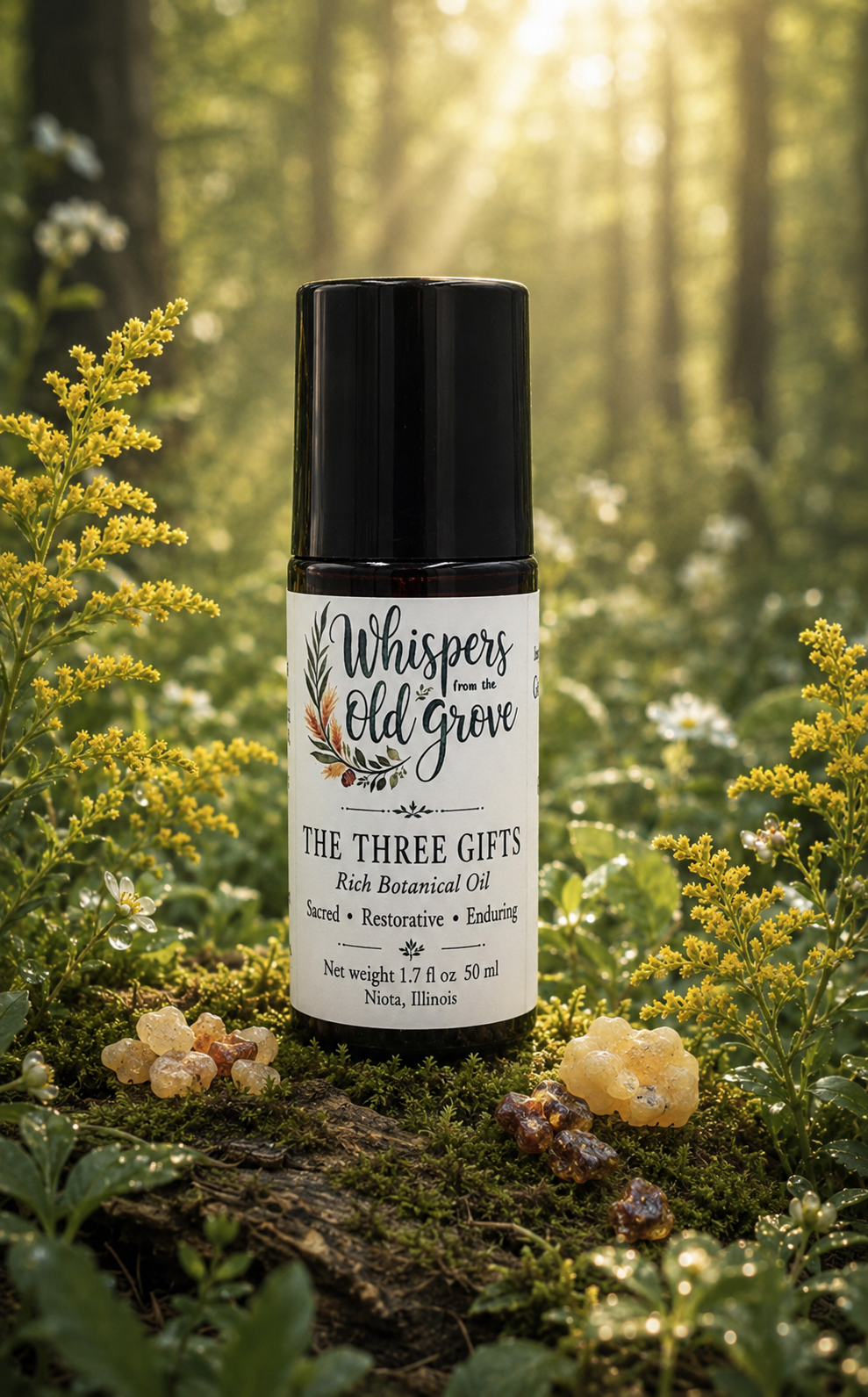
The Three Gifts - Body Oil
The Three Gifts - Body Oil
Couldn't load pickup availability
Deep nourishment, protective moisture retention, and time-honored botanical restoration in one rich, concentrated oil.
WHY THIS FORMULA EXCELS
- Long-lasting moisture protection: Castor oil’s ricinoleic-acid-rich triglycerides form a substantive emollient layer that softens skin and helps reduce moisture loss.
- Balanced botanical delivery: Lightweight jojoba wax esters improve spreadability while carrying the goldenrod infusion across the skin.
- Resin-derived botanical support: Frankincense and myrrh essential oils contribute aromatic terpenes with laboratory-demonstrated antioxidant and inflammation-modulating activity.
- Dual antioxidant system: Tocopheryl acetate conditions the skin while rosemary antioxidant extract helps protect oxidation-prone oils from deterioration.
- Concentrated anhydrous performance: The water-free formula delivers lipid-soluble ingredients without requiring a conventional water-phase preservative.
INGREDIENTS – KEY COMPONENTS – BENEFITS – SCIENTIFIC RATIONALE – REFERENCES
1. Castor Oil
INCI: Ricinus Communis Seed Oil
Key Components:
- Ricinoleic acid—usually approximately 85–90% of the fatty-acid content
- Oleic acid
- Linoleic acid
- Stearic and palmitic acids
- Triglycerides
- Naturally occurring tocopherols and phytosterols
Functional Role:
- Primary emollient
- Moisture-retaining oil
- Viscosity and texture enhancer
- Carrier for concentrated botanical ingredients
Skin Benefits:
- Softens dry, rough, or weather-exposed skin
- Helps reduce transepidermal water loss
- Leaves a protective, conditioning layer
- Improves the appearance of skin suppleness and smoothness
- Supports a comfortable environment for dry or compromised-looking skin
Scientific Rationale:
Castor oil differs from most plant oils because of its exceptionally high concentration of ricinoleic acid, a hydroxylated fatty acid. The hydroxyl group gives castor oil its characteristic polarity, viscosity, adherence, and moisture-retaining behavior.
Applied topically, castor oil functions primarily as an emollient and occlusive-support ingredient. It fills spaces between superficial skin cells and forms a substantive film that slows water evaporation. Ricinoleic acid has also demonstrated inflammation-modulating and antimicrobial activity in experimental research, although direct human clinical evidence for treating inflammatory skin conditions is limited.
2. Goldenrod-Infused Jojoba Oil
Typical INCI: Simmondsia Chinensis Seed Oil (and) Solidago [Canadensis and Altissima] Flower Extract
Key Components:
From jojoba:
- Long-chain wax esters
- Fatty alcohols
- Small amounts of free fatty acids
- Tocopherols
- Phytosterols
Potentially extracted from goldenrod:
- Lipophilic flavonoid fractions
- Phenolic compounds
- Diterpenes and triterpenes
- Carotenoids
- Other oil-soluble botanical constituents
Functional Role:
- Lightweight emollient
- Botanical-infusion carrier
- Skin-conditioning oil
- Spreadability and sensory enhancer
Skin Benefits:
- Softens skin without excessive heaviness
- Helps reduce surface moisture loss
- Supports a smooth and resilient skin barrier
- Helps calm the appearance of environmentally stressed skin
- Balances the heavier texture of castor oil
Scientific Rationale:
Jojoba is technically a liquid wax rather than a conventional triglyceride oil. Approximately 98% of its lipid fraction consists of long-chain wax esters. This stable structure gives jojoba excellent oxidative stability, smooth spreadability, and an affinity for the skin’s surface lipids.
Goldenrod contains flavonoids, phenolic acids, saponins, terpenes, and other compounds associated with antioxidant and inflammation-modulating activity.
3. Frankincense Essential Oil
INCI: Boswellia Carterii Oil
Key Components:
- Alpha-pinene
- Limonene
- Alpha-thujene
- Sabinene
- Beta-pinene
- Beta-caryophyllene
- Other monoterpenes and sesquiterpenes
Functional Role:
- Aromatic botanical active
- Skin-conditioning essential oil
- Supplementary antioxidant support
- Fragrance component
Skin Benefits:
- Helps calm the appearance of stressed skin
- Supports a smooth, balanced-looking complexion
- Provides supplementary antioxidant activity
- Complements the warm, resinous character of myrrh
- Contributes a fresh, balsamic aroma
Scientific Rationale:
Frankincense essential oil contains volatile terpenes that demonstrate antioxidant and inflammation-modulating activity in laboratory models. Research involving human dermal fibroblasts suggests that frankincense essential oil can influence biological pathways associated with inflammation and tissue remodeling.
4. Myrrh Essential Oil
INCI: Commiphora Myrrha Oil
Key Components:
- Furanoeudesma-1,3-diene
- Curzerene
- Lindestrene
- Furanodiene
- Beta-elemene
- Germacrene-type sesquiterpenes
- Other furanosesquiterpenes
Functional Role:
- Aromatic botanical active
- Skin-conditioning essential oil
- Supplementary antioxidant ingredient
- Fragrance component
Skin Benefits:
- Helps condition dry or mature-looking skin
- Supports a calm, balanced appearance
- Provides complementary antioxidant activity
- Contributes a deep, warm, earthy-resinous aroma
- Complements frankincense in the formula’s aromatic profile
Scientific Rationale:
Myrrh essential oil is characterized by sesquiterpenes and furanosesquiterpenes, including curzerene and furanoeudesma derivatives. Laboratory studies suggest that myrrh oil can influence inflammatory mediators such as interleukin signaling, prostaglandin production, and NF-κB-associated activity.
5. Vitamin E
INCI: Tocopheryl Acetate
Key Components:
- Esterified alpha-tocopherol
- Acetic acid ester of vitamin E
Functional Role:
- Skin-conditioning antioxidant
- Emollient-support ingredient
- Stable vitamin E derivative
Skin Benefits:
- Helps condition and soften the skin
- Supports protection of skin-surface lipids
- Complements the formula’s botanical antioxidant system
- Helps maintain a smooth, supple appearance
- Supports skin exposed to environmental oxidative stress
Scientific Rationale:
Tocopheryl acetate is a stabilized form of vitamin E in which the reactive hydroxyl group of alpha-tocopherol is esterified with acetic acid. This makes it more resistant to oxidation during storage than free tocopherol.
Enzymes present in living skin may convert a portion of tocopheryl acetate into active alpha-tocopherol. However, the extent of conversion varies with concentration, formulation, application site, and skin condition.
Once available as free tocopherol, vitamin E can interrupt lipid-peroxidation reactions by donating hydrogen to lipid radicals. This helps protect cellular and skin-surface lipids from oxidative damage.
6. Rosemary Antioxidant Extract
INCI: Rosmarinus Officinalis Leaf Extract
Key Components:
- Carnosic acid
- Carnosol
- Rosmanol
- Epirosmanol
- Other phenolic diterpenes
- Small amounts of additional polyphenolic compounds
Functional Role:
- Oil-phase antioxidant
- Formula-stability enhancer
- Protection against oxidative rancidity
- Supplementary skin-conditioning botanical
Skin Benefits:
- Helps protect skin-surface lipids from oxidative stress
- Provides supplementary botanical antioxidant activity
- Supports the stability and freshness of the oils applied to the skin
- Helps prevent application of oils that have deteriorated through oxidation
Scientific Rationale:
Carnosic acid and carnosol are lipid-soluble phenolic diterpenes capable of donating hydrogen and neutralizing reactive radicals. They help interrupt the oxidative chain reactions that cause unsaturated plant oils to become rancid.
Carnosic acid is progressively converted into antioxidant derivatives—including carnosol and related compounds—as it reacts with oxidative stressors. This antioxidant cascade helps protect the formula’s lipid components.
Rosemary antioxidant extract is especially valuable in a formula containing botanical oils and plant infusions, whose unsaturated lipids and extracted plant constituents may be susceptible to oxidation.
FORMULA SYNERGY
This formula combines four complementary functional systems:
1. Protective moisture retention
Castor oil creates a rich, substantive emollient layer that slows moisture evaporation and improves the appearance of dry, rough skin.
2. Lightweight botanical delivery
Jojoba wax esters dilute the heavier castor oil, improve spreadability, and provide a stable carrier for the goldenrod infusion.
3. Resin-derived aromatic support
Frankincense and myrrh essential oils provide complementary monoterpenes, sesquiterpenes, and furanosesquiterpenes associated with antioxidant and inflammation-modulating activity in laboratory research.
4. Dual formula and skin antioxidant support
Rosemary antioxidant extract helps protect the oils inside the bottle, while tocopheryl acetate primarily contributes stable skin-conditioning vitamin E activity.
OVERALL FUNCTIONAL PROFILE
This oil is particularly suited to cosmetic positioning around:
- Deep nourishment
- Protective moisture retention
- Dry or mature-looking skin
- Skin softness and suppleness
- Botanical conditioning
- Healthy barrier support
- Antioxidant-rich care
- A warm, resinous sensory ritual
It does not directly supply water or function as a humectant. Instead, it helps preserve existing moisture by softening the skin and reducing surface water loss. It will generally perform best when applied over slightly damp skin or following a water-based hydration serum.
REFERENCES
- Girdler, K., et al. (2026). Use of castor oil in dermatology: A narrative review. PubMed Central.
- Cosmetic Ingredient Review Expert Panel. (2007). Final report on the safety assessment of Ricinus Communis (Castor) Seed Oil and related ingredients. PubMed.
- Fiume, M. M., et al. (2025). Re-review summary of Ricinus Communis (Castor) Seed Oil and ricinoleate ingredients. PubMed.
- Gad, H. A., et al. (2021). Jojoba oil: An updated comprehensive review on chemistry, pharmaceutical uses, and toxicity. PubMed Central.
- Fursenco, C., et al. (2020). Solidago virgaurea L.: A review of its ethnomedicinal uses, phytochemistry, and pharmacological activities. PubMed Central.
- Han, X., et al. (2017). Biological activities of frankincense essential oil in human dermal fibroblasts. PubMed Central.
- Almeida-da-Silva, C. L. C., et al. (2022). Effects of frankincense compounds on infection, inflammation, and oral health. PubMed Central.
- Tipton, D. A., Hamman, N. R., & Dabbous, M. K. (2003). Effect of myrrh oil on IL-1β stimulation of NF-κB activation and PGE₂ production in human gingival fibroblasts and epithelial cells. PubMed.
- Keen, M. A., & Hassan, I. (2016). Vitamin E in dermatology. PubMed Central.
- Thiele, J. J., & Ekanayake-Mudiyanselage, S. (2005). Vitamin E: Critical review of its current use in cosmetic and clinical dermatology. PubMed.
- Gamna, F., et al. (2021). Vitamin E: A review of its application and methods of detection when combined with implant biomaterials. PubMed Central.
- Loussouarn, M., et al. (2017). Carnosic acid and carnosol, two major antioxidants of rosemary, act through different mechanisms. PubMed Central.
- Nieto, G., Ros, G., & Castillo, J. (2018). Antioxidant and antimicrobial properties of rosemary extracts linked to their polyphenolic composition. PubMed Central.
- Michalak, M. (2022). Plant-derived antioxidants: Significance in skin health and the ageing process. PubMed Central.
- Lin, T. K., Zhong, L., & Santiago, J. L. (2018). Anti-inflammatory and skin-barrier repair effects of topical application of some plant oils. PubMed Central.
This information describes traditional use and published research and is not intended to diagnose, treat, cure, or prevent disease.
Talk about your brand
Share information about your brand with your customers. Describe a product, make announcements, or welcome customers to your store.