
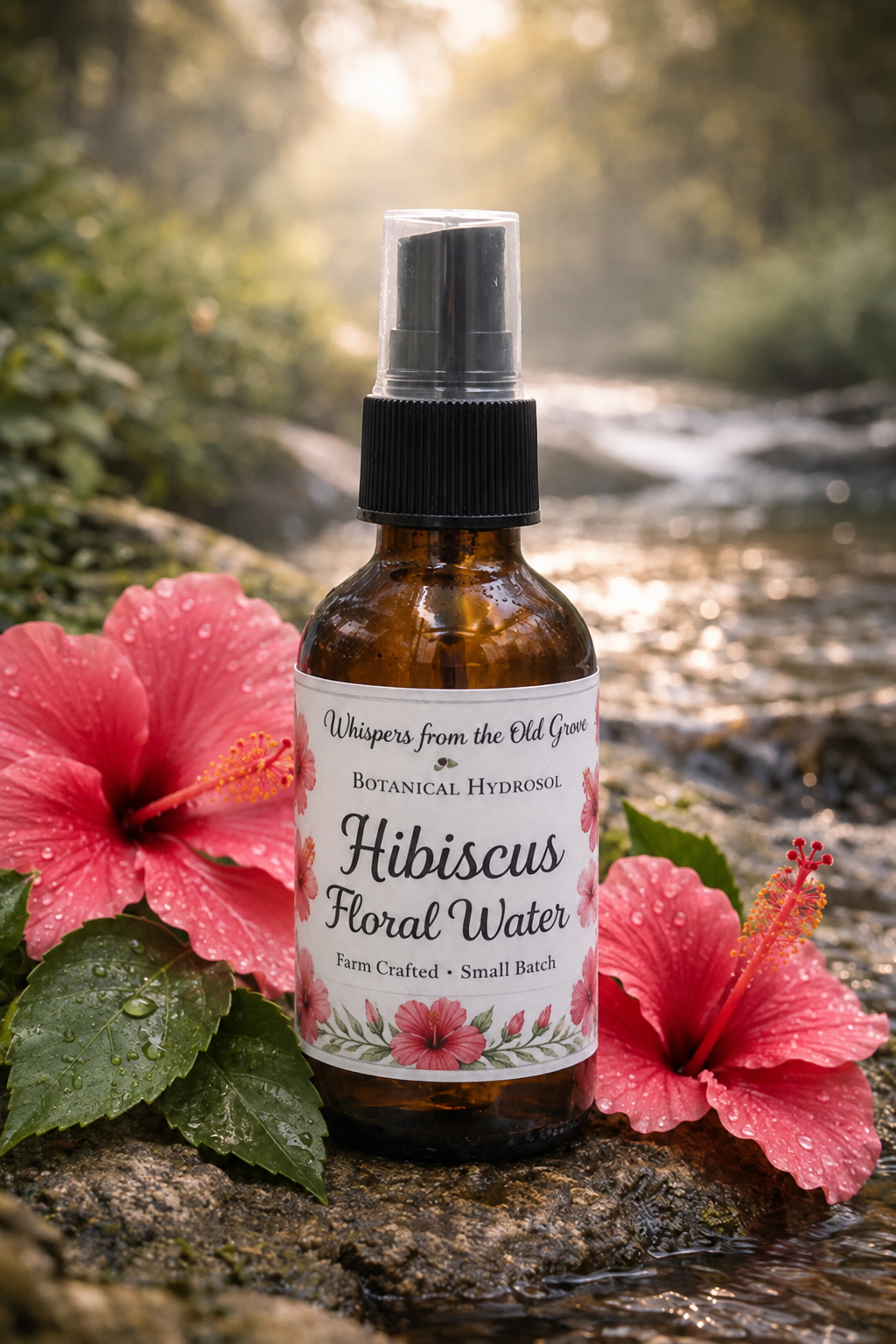
Botanical Floral Water - Hibiscus
Botanical Floral Water - Hibiscus
Couldn't load pickup availability
A vibrant botanical mist that refreshes, softens, and revitalizes—bringing lightweight hydration and a naturally radiant feel to skin, hair, and scalp.
WHY THIS INGREDIENT EXCELS
Antioxidant-rich botanical: Hibiscus contains anthocyanins, flavonoids, and phenolic compounds associated with antioxidant activity.
Lightweight botanical hydration: Refreshes skin and hair without the heaviness of oils or creams.
Naturally revitalizing: Its botanical character creates a fresh, uplifting sensory ritual for face, body, hair, and scalp.
Skin-loving organic acids: Hibiscus naturally contains citric, malic, hibiscus, and other organic acids associated with its characteristic gently acidic profile.
INGREDIENTS – KEY COMPONENTS – BENEFITS – SCIENTIFIC RATIONALE – REFERENCES
Hibiscus sabdariffa Flower Water
Common Names: Hibiscus Floral Water • Roselle Floral Water
Key Components
- Anthocyanins — especially delphinidin-3-sambubioside and cyanidin-3-sambubioside
- Flavonoids — including quercetin and related compounds
- Phenolic acids — including protocatechuic, chlorogenic, and caffeic acids
- Organic acids — including hibiscus, citric, malic, tartaric, and ascorbic acids
- Water-soluble aromatic constituents
Hibiscus anthocyanins are water-soluble pigments and are among the plant's most characteristic phytochemicals.
MOOD & WELL-BEING BENEFITS
- Creates a fresh, revitalizing sensory experience
- Encourages a refreshing botanical self-care ritual
- Provides a gentle sensory lift when misted onto skin or hair
- Offers a bright, botanical alternative to heavily fragranced mists
Scientific Rationale (Mood)
Hibiscus does contain some aromatic constituents, but its strongest scientific evidence centers on its polyphenols, anthocyanins, organic acids, and antioxidant properties – which have shown to influence sensory-uplifting.
SKIN BENEFITS
- Provides a fresh, lightweight layer of moisture
- Helps leave skin feeling soft and refreshed
- Supports a healthy, radiant-looking complexion
- Provides botanical antioxidant compounds
- Helps support skin exposed to environmental oxidative stress
- Naturally occurring organic acids complement its skin-refreshing character
- Well suited to facial and body mist applications when appropriately formulated
Scientific Rationale (Skin)
Hibiscus is particularly rich in anthocyanins, flavonoids, phenolic acids, and organic acids. These compounds have demonstrated substantial antioxidant and anti-inflammatory activity in experimental research. Anthocyanins such as delphinidin-3-sambubioside and cyanidin-3-sambubioside contribute significantly to the antioxidant activity associated with Hibiscus sabdariffa.
Phenolic compounds can help neutralize reactive oxygen species in experimental systems, providing a scientific basis for hibiscus's use as an antioxidant-focused botanical cosmetic ingredient.
HAIR & SCALP BENEFITS
- Provides lightweight moisture without oily residue
- Refreshes dry-feeling hair and scalp
- Helps leave hair feeling soft and conditioned
- Offers an antioxidant-rich botanical component for scalp-care formulations
- Refreshes curls and waves between washes
- Can be used as a light botanical mist before oils or leave-in products
Scientific Rationale (Hair & Scalp)
The antioxidant and anti-inflammatory potential associated with hibiscus polyphenols provides a reasonable basis for its inclusion in scalp and hair-care formulations, particularly products designed to refresh and condition without heavy oils. Hibiscus extracts have also demonstrated antimicrobial activity in experimental research.
REFERENCES
- Riaz, G., & Chopra, R. (2018). A review on phytochemistry and therapeutic uses of Hibiscus sabdariffa L. Biomedicine & Pharmacotherapy, 102, 575–586.
- Da-Costa-Rocha, I., Bonnlaender, B., Sievers, H., Pischel, I., & Heinrich, M. (2014). Hibiscus sabdariffa L.—A phytochemical and pharmacological review. Food Chemistry, 165, 424–443.
- Hopkins, A. L., Lamm, M. G., Funk, J. L., & Ritenbaugh, C. (2013). Hibiscus sabdariffa L. in the treatment of hypertension and hyperlipidemia: A comprehensive review of animal and human studies. Fitoterapia, 85, 84–94.
- Jabeur, I., Pereira, E., Barros, L., et al. (2017). Hibiscus sabdariffa L. as a source of nutrients, bioactive compounds and colouring agents. Food Research International, 100, 717–723.
- Izquierdo-Vega, J. A., et al. (2020). Organic acids from Roselle (Hibiscus sabdariffa L.)—A brief review of its pharmacological effects. Biomedicines, 8(5), 100.
- Physiological Effects and Human Health Benefits of Hibiscus sabdariffa: A Review of Clinical Trials. Nutrients (2022). This review discusses hibiscus's phenolic acids, flavonoids, anthocyanins, organic acids, and antioxidant properties.
This information describes traditional use and published research and is not intended to diagnose, treat, cure, or prevent disease.
Talk about your brand
Share information about your brand with your customers. Describe a product, make announcements, or welcome customers to your store.